.
.
This is wonderful... a Piano Choir by Dan & Dan.. worth the watch

Thursday, August 20, 2009


Wednesday, August 19, 2009
Images Bazaar
.
.

.
.
.
The buoyancy in marketing and promotions for products and services spur demand for visuals that have an Indian flavour.
Interestingly, the demand for local visuals is strong, whether the promotion is for a local brand or an MNC brand as long as the marketing effort is targeted at domestic consumers. "The Indian market for images is estimated to be worth roughly $10 million, which is miniscule compared to the global images business industry worth $2 billion, but what is significant is that India is leapfrogging in this business," Sandeep Maheshwari, CEO of ImagesBazaar.
Surveys have revealed that in visual communication, a product or service meant for a particular population would be more successful if it carries a face that viewers can relate to, rather than a visual from a different part of the world. This, industry observers say, has led to a surge in demand for Indian visuals for the ever-growing business in the country in brochures, hoardings, packaging, presentations and even websites.
Courtesy Economic Times
.
.

.
.
.
The buoyancy in marketing and promotions for products and services spur demand for visuals that have an Indian flavour.
Interestingly, the demand for local visuals is strong, whether the promotion is for a local brand or an MNC brand as long as the marketing effort is targeted at domestic consumers. "The Indian market for images is estimated to be worth roughly $10 million, which is miniscule compared to the global images business industry worth $2 billion, but what is significant is that India is leapfrogging in this business," Sandeep Maheshwari, CEO of ImagesBazaar.
Surveys have revealed that in visual communication, a product or service meant for a particular population would be more successful if it carries a face that viewers can relate to, rather than a visual from a different part of the world. This, industry observers say, has led to a surge in demand for Indian visuals for the ever-growing business in the country in brochures, hoardings, packaging, presentations and even websites.
Courtesy Economic Times
.
Smooth sea never makes a skillful sailor
.
.
.
Most of us -- if we’re lucky -- chug along more or less contentedly in an uneventful day-by-day routine . . a little like the opening of a recent chamber work by the American composer John Howell Morrison.
But sometimes, in some lives, something happens that suddenly disrupts the uneventful, comfortable routine, something that knocks all routine and normality straight out of the ballpark: perhaps it's the loss of a job, or the loss of a loved one, and suddenly routine physical or mental health is so shaken that the soundtrack of life shifts to something uncomfortably similar to that of a bad horror film.
Most of us -- if we're lucky -- somehow survive, and are perhaps even grow a bit stronger from the experience.
As the old saying goes: "Hard Weather Makes Good Wood" -- and that's the title Morrison gave his piece, scored for string quartet and electronic tape, recorded in 2002 as the title track on an innova CD collection of his chamber works.
And, yes, Morrison confesses that "Hard Weather Makes Good Wood" was, in fact, composed during a period of intense personal struggle in his own life.
We're not sure if he feels stronger for surviving that experience, but at least it resulted in striking new piece of chamber music.
.
.
.
.
Most of us -- if we’re lucky -- chug along more or less contentedly in an uneventful day-by-day routine . . a little like the opening of a recent chamber work by the American composer John Howell Morrison.
But sometimes, in some lives, something happens that suddenly disrupts the uneventful, comfortable routine, something that knocks all routine and normality straight out of the ballpark: perhaps it's the loss of a job, or the loss of a loved one, and suddenly routine physical or mental health is so shaken that the soundtrack of life shifts to something uncomfortably similar to that of a bad horror film.
Most of us -- if we're lucky -- somehow survive, and are perhaps even grow a bit stronger from the experience.
As the old saying goes: "Hard Weather Makes Good Wood" -- and that's the title Morrison gave his piece, scored for string quartet and electronic tape, recorded in 2002 as the title track on an innova CD collection of his chamber works.
And, yes, Morrison confesses that "Hard Weather Makes Good Wood" was, in fact, composed during a period of intense personal struggle in his own life.
We're not sure if he feels stronger for surviving that experience, but at least it resulted in striking new piece of chamber music.
.
.
Aiswarya the 8 yr old girl with a black belt
.
.
I have been observing a writing about people who hover in the lower half of India's socio economic pyramid. This morning I watched this confident girl, Aiswarya, in her third standard being interviewed. I was impressed by this girls confidence. Her father owns a tea shop and his friend is a Karate Master (Sensei) so when Aiswarya was 3 1/2 years of age she started her training. Now she is in the 3rd standard and she is a black belt (first dan) she studies well and goes for dance classes 3 days a week in the evening.
The saddest part is I was trying to google her name with various combinations to get some information about her...and I get to see the plasticine and gorgeous Aiswarya Rai..
.
.
.
I have been observing a writing about people who hover in the lower half of India's socio economic pyramid. This morning I watched this confident girl, Aiswarya, in her third standard being interviewed. I was impressed by this girls confidence. Her father owns a tea shop and his friend is a Karate Master (Sensei) so when Aiswarya was 3 1/2 years of age she started her training. Now she is in the 3rd standard and she is a black belt (first dan) she studies well and goes for dance classes 3 days a week in the evening.
The saddest part is I was trying to google her name with various combinations to get some information about her...and I get to see the plasticine and gorgeous Aiswarya Rai..
.
.
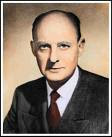
Karl Paul Reinhold Niebuhr
.
.................................................................
Karl Paul Reinhold Niebuhr (June 21, 1892 – June 1, 1971) was an American theologian. A Protestant, he is best known for his study of the task of relating the Christian faith to the realities of modern politics and diplomacy. He was an important contributor to modern "just war" thinking.
Niebuhr was born in Wright City, Missouri, USA, son of German Evangelical pastor Gustav Niebuhr and his wife. Reinhold had a younger brother Helmut Richard Niebuhr. Both sons decided to follow in their father's footsteps and enter the ministry. Reinhold Niebuhr attended Elmhurst College in Illinois and graduated in 1910. He then studied at Eden Theological Seminary in Webster Groves, Missouri. Finally, Niebuhr attended Yale University, where he earned his Bachelor of Divinity Degree in 1914 and was a member of Alpha Sigma Phi Fraternity. In 1915, Niebuhr was ordained a pastor.
The German Evangelical mission board sent Niebuhr to serve in Detroit, Michigan. The congregation numbered sixty-five on his arrival and grew to nearly 700 by the time he left in 1928. The increase reflected the tremendous growth of population attracted to jobs in the booming automobile industry.
During his pastorate, Niebuhr was troubled by the demoralizing effects of industrialism on workers. He became an outspoken critic of Henry Ford and allowed union organizers to use his pulpit to expound their message of workers' rights. Niebuhr documented inhumane conditions created by the assembly lines and erratic employment practices.
.
.

.................................................................
Karl Paul Reinhold Niebuhr (June 21, 1892 – June 1, 1971) was an American theologian. A Protestant, he is best known for his study of the task of relating the Christian faith to the realities of modern politics and diplomacy. He was an important contributor to modern "just war" thinking.
Niebuhr was born in Wright City, Missouri, USA, son of German Evangelical pastor Gustav Niebuhr and his wife. Reinhold had a younger brother Helmut Richard Niebuhr. Both sons decided to follow in their father's footsteps and enter the ministry. Reinhold Niebuhr attended Elmhurst College in Illinois and graduated in 1910. He then studied at Eden Theological Seminary in Webster Groves, Missouri. Finally, Niebuhr attended Yale University, where he earned his Bachelor of Divinity Degree in 1914 and was a member of Alpha Sigma Phi Fraternity. In 1915, Niebuhr was ordained a pastor.
The German Evangelical mission board sent Niebuhr to serve in Detroit, Michigan. The congregation numbered sixty-five on his arrival and grew to nearly 700 by the time he left in 1928. The increase reflected the tremendous growth of population attracted to jobs in the booming automobile industry.
During his pastorate, Niebuhr was troubled by the demoralizing effects of industrialism on workers. He became an outspoken critic of Henry Ford and allowed union organizers to use his pulpit to expound their message of workers' rights. Niebuhr documented inhumane conditions created by the assembly lines and erratic employment practices.
.
.
Fashion Fades, only style remains - Coco Chanel
.
.

.
.
Coco Chanel
She was shrewd, chic and on the cutting edge. The clothes she created changed the way women looked and how they looked at themselves
By INGRID SISCHY
....................................
The woman who created "the little black dress": Coco Chanel, born Gabrielle Chanel in Saumur, France (1883). Her parents were poor, she was an illegitimate child, and when her mother died, she was sent to an orphanage. When she turned 18, she went to work for a tailor, and she also sang in cafés and concert halls. She was a mistress to one wealthy man and then another, and with the money they gave her, she set up her own millinery shop, which she opened in 1910. Soon her clothes became popular among the elite of Paris. She took men's styles and made them feminine — loose clothes made from jersey, short skirts, suits — and women were relieved to have comfortable clothes suddenly be stylish, and to get rid of the corsets that had been popular for many years. She expanded into the perfume business and created Chanel No. 5. She was still at work when she died in 1971, having ruled over the Paris fashion industry for almost 60 years.
She said, "Fashion fades, only style remains the same."
.
_______________________
.
Coco Chanel wasn't just ahead of her time. She was ahead of herself. If one looks at the work of contemporary fashion designers as different from one another as Tom Ford, Helmut Lang, Miuccia Prada, Jil Sander and Donatella Versace, one sees that many of their strategies echo what Chanel once did. The way, 75 years ago, she mixed up the vocabulary of male and female clothes and created fashion that offered the wearer a feeling of hidden luxury rather than ostentation are just two examples of how her taste and sense of style overlap with today's fashion.
Chanel would not have defined herself as a feminist — in fact, she consistently spoke of femininity rather than of feminism — yet her work is unquestionably part of the liberation of women. She threw out a life jacket, as it were, to women not once but twice, during two distinct periods decades apart: the 1920s and the '50s. She not only appropriated styles, fabrics and articles of clothing that were worn by men but also, beginning with how she dressed herself, appropriated sports clothes as part of the language of fashion. One can see how her style evolved out of necessity and defiance. She couldn't afford the fashionable clothes of the period — so she rejected them and made her own, using, say, the sports jackets and ties that were everyday male attire around the racetrack, where she was climbing her first social ladders.
It's not by accident that she became associated with the modern movement that included Diaghilev, Picasso, Stravinsky and Cocteau. Like these artistic protagonists, she was determined to break the old formulas and invent a way of expressing herself. Cocteau once said of her that "she has, by a kind of miracle, worked in fashion according to rules that would seem to have value only for painters, musicians, poets."
By the late '60s, Chanel had become part of what she once rebelled against and hated — the Establishment. But if one looks at documentary footage of her from that period, one can still feel the spit and vinegar of the fiery peasant woman who began her fashion revolution against society by aiming at the head, with hats. Her boyish "flapper" creations were in stark contrast to the Belle Epoque millinery that was in vogue at the time, and about which she asked, "How can a brain function under those things?" Something that Chanel can never be accused of is not using her brain. Her sharp mind is apparent in everything she did, from her savvy use of logos to her deep understanding of the power of personality and packaging, even the importance of being copied. And she was always quotable: "Fashion is not simply a matter of clothes. Fashion is in the air, born upon the wind. One intuits it. It is in the sky and on the road."
It is fitting, somehow, that Chanel was often photographed holding a cigarette or standing in front of her famous Art Deco wall of mirrors. Fashion tends to involve a good dose of smoke and mirrors, so it should come as no surprise that Gabrielle Chanel's version of her life involved a multitude of lies, inventions, cover-ups and revisions. But as Prada said to me: "She was really a genius. It's hard to pin down exactly why, but it has something to do with her wanting to be different and wanting to be independent."
Certainly her life was unpredictable. Even her death — in 1971, at the age of 87 in her private quarters at the Ritz Hotel — was a plush ending that probably would not have been predicted for Chanel by the nuns in the Aubazine orphanage, where she spent time as a ward of the state after her mother died and her father ran off. No doubt the sisters at the convent in Moulins, who took her in when she was 17, raised their eyebrows when the young woman left the seamstress job they had helped her get to try for a career as a cabaret singer. This stint as a performer — she was apparently charming but no Piaf — led her to take up with the local swells and become the backup mistress of Etienne Balsan, a playboy who would finance her move to Paris and the opening of her first hat business. That arrangement gave way to a bigger and better deal when she moved on to his friend, Arthur ("Boy") Capel, who is said to have been the love of her life and who backed her expansion from hats to clothes and from Paris to the coastal resorts of Deauville and Biarritz. One of her first successes was the loose-fitting sweater, which she belted and teamed with a skirt. These early victories were similar to the clothes she had been making for herself — women's clothes made out of Everyman materials such as jersey, usually associated with men's undergarments.
.
.
courtesy TIME 100
.

.
.
Coco Chanel
She was shrewd, chic and on the cutting edge. The clothes she created changed the way women looked and how they looked at themselves
By INGRID SISCHY
....................................
The woman who created "the little black dress": Coco Chanel, born Gabrielle Chanel in Saumur, France (1883). Her parents were poor, she was an illegitimate child, and when her mother died, she was sent to an orphanage. When she turned 18, she went to work for a tailor, and she also sang in cafés and concert halls. She was a mistress to one wealthy man and then another, and with the money they gave her, she set up her own millinery shop, which she opened in 1910. Soon her clothes became popular among the elite of Paris. She took men's styles and made them feminine — loose clothes made from jersey, short skirts, suits — and women were relieved to have comfortable clothes suddenly be stylish, and to get rid of the corsets that had been popular for many years. She expanded into the perfume business and created Chanel No. 5. She was still at work when she died in 1971, having ruled over the Paris fashion industry for almost 60 years.
She said, "Fashion fades, only style remains the same."
.
_______________________
.
Coco Chanel wasn't just ahead of her time. She was ahead of herself. If one looks at the work of contemporary fashion designers as different from one another as Tom Ford, Helmut Lang, Miuccia Prada, Jil Sander and Donatella Versace, one sees that many of their strategies echo what Chanel once did. The way, 75 years ago, she mixed up the vocabulary of male and female clothes and created fashion that offered the wearer a feeling of hidden luxury rather than ostentation are just two examples of how her taste and sense of style overlap with today's fashion.
Chanel would not have defined herself as a feminist — in fact, she consistently spoke of femininity rather than of feminism — yet her work is unquestionably part of the liberation of women. She threw out a life jacket, as it were, to women not once but twice, during two distinct periods decades apart: the 1920s and the '50s. She not only appropriated styles, fabrics and articles of clothing that were worn by men but also, beginning with how she dressed herself, appropriated sports clothes as part of the language of fashion. One can see how her style evolved out of necessity and defiance. She couldn't afford the fashionable clothes of the period — so she rejected them and made her own, using, say, the sports jackets and ties that were everyday male attire around the racetrack, where she was climbing her first social ladders.
It's not by accident that she became associated with the modern movement that included Diaghilev, Picasso, Stravinsky and Cocteau. Like these artistic protagonists, she was determined to break the old formulas and invent a way of expressing herself. Cocteau once said of her that "she has, by a kind of miracle, worked in fashion according to rules that would seem to have value only for painters, musicians, poets."
By the late '60s, Chanel had become part of what she once rebelled against and hated — the Establishment. But if one looks at documentary footage of her from that period, one can still feel the spit and vinegar of the fiery peasant woman who began her fashion revolution against society by aiming at the head, with hats. Her boyish "flapper" creations were in stark contrast to the Belle Epoque millinery that was in vogue at the time, and about which she asked, "How can a brain function under those things?" Something that Chanel can never be accused of is not using her brain. Her sharp mind is apparent in everything she did, from her savvy use of logos to her deep understanding of the power of personality and packaging, even the importance of being copied. And she was always quotable: "Fashion is not simply a matter of clothes. Fashion is in the air, born upon the wind. One intuits it. It is in the sky and on the road."
It is fitting, somehow, that Chanel was often photographed holding a cigarette or standing in front of her famous Art Deco wall of mirrors. Fashion tends to involve a good dose of smoke and mirrors, so it should come as no surprise that Gabrielle Chanel's version of her life involved a multitude of lies, inventions, cover-ups and revisions. But as Prada said to me: "She was really a genius. It's hard to pin down exactly why, but it has something to do with her wanting to be different and wanting to be independent."
Certainly her life was unpredictable. Even her death — in 1971, at the age of 87 in her private quarters at the Ritz Hotel — was a plush ending that probably would not have been predicted for Chanel by the nuns in the Aubazine orphanage, where she spent time as a ward of the state after her mother died and her father ran off. No doubt the sisters at the convent in Moulins, who took her in when she was 17, raised their eyebrows when the young woman left the seamstress job they had helped her get to try for a career as a cabaret singer. This stint as a performer — she was apparently charming but no Piaf — led her to take up with the local swells and become the backup mistress of Etienne Balsan, a playboy who would finance her move to Paris and the opening of her first hat business. That arrangement gave way to a bigger and better deal when she moved on to his friend, Arthur ("Boy") Capel, who is said to have been the love of her life and who backed her expansion from hats to clothes and from Paris to the coastal resorts of Deauville and Biarritz. One of her first successes was the loose-fitting sweater, which she belted and teamed with a skirt. These early victories were similar to the clothes she had been making for herself — women's clothes made out of Everyman materials such as jersey, usually associated with men's undergarments.
.
.
courtesy TIME 100
Tuesday, August 18, 2009
Children being fed by the crows
.
.

.
.
I heard this bizarre narration from a person who struggles to have his ends meet up. As I was discussing with him I found him to be more concerned about people who was less fortunate than him. Strange guy??
He asked me, who do you think feeds the children on the road side whose parents dont really have the capability to take care of themselves? I was quite flummoxed... who ever thinks of all these issues as we sit comfortably in our own cubby holes trying to battle with our own "problems" like the internet connection is down, our holiday destination etc etc.
I threw up my hands and pleaded ignorance... He says those kids are fed by the crows... would you believe? Its quite tough but I decided to really investigate it myself...
I recall Aloke posting this link in Facebook check it out link
.
.
.

.
.
I heard this bizarre narration from a person who struggles to have his ends meet up. As I was discussing with him I found him to be more concerned about people who was less fortunate than him. Strange guy??
He asked me, who do you think feeds the children on the road side whose parents dont really have the capability to take care of themselves? I was quite flummoxed... who ever thinks of all these issues as we sit comfortably in our own cubby holes trying to battle with our own "problems" like the internet connection is down, our holiday destination etc etc.
I threw up my hands and pleaded ignorance... He says those kids are fed by the crows... would you believe? Its quite tough but I decided to really investigate it myself...
I recall Aloke posting this link in Facebook check it out link
.
.
The paradoxical leader - Genghis Khan
.
.
Mongol boy Temujin grew up be a great leader and warrior, he left behind an empire that stretched from the east coast of China across to Russia and down to the Aral Sea. The empire continued to grow after his death, and by 1280, it covered 12 million square miles, about two-thirds of the "known world" at the time. The Mongol Empire was the largest connected empire in history — only the British Empire exceeded it.
He was an unusual conqueror. On one hand, he was brutal. He led his soldiers — all on horseback — to massacre countless innocent people as a warning to his new subjects. But once he had established control, he left people with a surprising amount of freedom — he made sure they had access to food; he established governments, often with local officials; he allowed women to speak in public and express opinions; and he allowed religious freedom, never trying to convert people. And although he himself was illiterate, he helped establish the first written Mongolian language.
I posted this on the FB and this is what Baruk Feddabon (BF) had to say:
BF:barbarians are not always barbaric...
ME:I understand he butchered ruthlessly to instill fear so his campaign will roll along with less bloodshed...Far better than those who invade the land with junk foods and colas masquerading as saviors of economy...
BF:interesting. are you suggesting it is worse to feed someone cola than to butcher them?
ME:I dont endorse either, quite a choice eh??? Cola being bad is a hogwash but the culture it perpetuates makes the sword of Genghis Khan seem like a rattle..
.
.
.
Mongol boy Temujin grew up be a great leader and warrior, he left behind an empire that stretched from the east coast of China across to Russia and down to the Aral Sea. The empire continued to grow after his death, and by 1280, it covered 12 million square miles, about two-thirds of the "known world" at the time. The Mongol Empire was the largest connected empire in history — only the British Empire exceeded it.
He was an unusual conqueror. On one hand, he was brutal. He led his soldiers — all on horseback — to massacre countless innocent people as a warning to his new subjects. But once he had established control, he left people with a surprising amount of freedom — he made sure they had access to food; he established governments, often with local officials; he allowed women to speak in public and express opinions; and he allowed religious freedom, never trying to convert people. And although he himself was illiterate, he helped establish the first written Mongolian language.
I posted this on the FB and this is what Baruk Feddabon (BF) had to say:
BF:barbarians are not always barbaric...
ME:I understand he butchered ruthlessly to instill fear so his campaign will roll along with less bloodshed...Far better than those who invade the land with junk foods and colas masquerading as saviors of economy...
BF:interesting. are you suggesting it is worse to feed someone cola than to butcher them?
ME:I dont endorse either, quite a choice eh??? Cola being bad is a hogwash but the culture it perpetuates makes the sword of Genghis Khan seem like a rattle..
.
.
Sunday, August 16, 2009
Commitment to education on music
.
.
.
Kodály's Symphony
It might seem odd that during his long career, Hungarian composer Zoltán Kodály wrote only nine works for orchestra. When someone asked him about this, he replied: "I was busy with more important work: I had to educate a public."
Kodály and his countryman Béla Bartók were pioneers in the collection and study of Hungarian folk music, and, on top of that, Kodály's lifelong concern was to instill this rich heritage into the Hungarian people through an extensive and innovative program of musical education. So successful was Kodály, that even outside Hungary the so-called "Kodály method," has been adapted for music education worldwide.
Given Kodály's tireless educational efforts, it's surprising he had any time or energy left for composing at all.
For example, Kodály started writing a symphony in the 1930s at the request of the great Italian conductor Arturo Toscanini. The Symphony finally received its premiere decades later at the Lucerne Festival in Switzerland on today's date in 1961, and by that time Toscanini had been dead for several years. Even so, Kodály did not forget the original request for the work, and dedicated his only Symphony to the memory of the great conductor.
In fact, Toscanini was also responsible for the creation of one of Kodály's most popular orchestral works: it was at Toscanini's prompting that Kodály orchestrated his Marosszék Dances, a set of folk tunes he had originally arranged for solo piano.
.
.
.
.
Kodály's Symphony
It might seem odd that during his long career, Hungarian composer Zoltán Kodály wrote only nine works for orchestra. When someone asked him about this, he replied: "I was busy with more important work: I had to educate a public."
Kodály and his countryman Béla Bartók were pioneers in the collection and study of Hungarian folk music, and, on top of that, Kodály's lifelong concern was to instill this rich heritage into the Hungarian people through an extensive and innovative program of musical education. So successful was Kodály, that even outside Hungary the so-called "Kodály method," has been adapted for music education worldwide.
Given Kodály's tireless educational efforts, it's surprising he had any time or energy left for composing at all.
For example, Kodály started writing a symphony in the 1930s at the request of the great Italian conductor Arturo Toscanini. The Symphony finally received its premiere decades later at the Lucerne Festival in Switzerland on today's date in 1961, and by that time Toscanini had been dead for several years. Even so, Kodály did not forget the original request for the work, and dedicated his only Symphony to the memory of the great conductor.
In fact, Toscanini was also responsible for the creation of one of Kodály's most popular orchestral works: it was at Toscanini's prompting that Kodály orchestrated his Marosszék Dances, a set of folk tunes he had originally arranged for solo piano.
.
.
‘Truth And Transformation’: The Wisdom Of Vishal Mangalwadi
.
.
.
By Chuck Colson, For The Bulletin
Tuesday, May 19, 2009
From the outside looking in, an intelligent observer can see the signs of a once-great civilization in decline: rising corruption, sexual licentiousness and the abandonment of once-cherished moral principles.
The once-great civilization is Western Christendom. And the outside observer is Indian scholar Vishal Mangalwadi. His new book, Truth and Transformation: A Manifesto for Ailing Nations shows how dearly the West is paying for abandoning the Christian worldview — the very worldview that made its greatness and prosperity possible.
It is no coincidence, Mr. Mangalwadi argues, that reason, science, and advanced technology developed and thrived in the West. That’s because Western man believed that God created an orderly universe that could be explored and understood — and whose resources could be harnessed to benefit mankind.
And because they believed that man was created in the image of God, the American founders could write that all men “are created equal, that they are endowed by their creator with certain unalienable rights.” Such thinking would have been preposterous in Hindu India or Confucianist China.
Mr. Mangalwadi, who has spent years in rural India trying to help the poor escape poverty, knows firsthand the practical consequences of a false worldview.
He relates how a village of poor farmers has been unable to overcome the repeated catastrophic flooding of their fields. Why not? Because they worship the river that destroys their livelihood. They never would have thought to create channels to divert the water. Instead of establishing dominion over the river, they have let the river — a god in their eyes — establish dominion over them.
Many of Mr. Mangalwadi’s efforts to help India’s “untouchables” develop a sustainable livelihood have been thwarted by upper-caste Brahmins — who feel they have a religious right to steal the fruits of the lower caste’s labor. No wonder India, the world’s largest democracy, still struggles with corruption and catastrophic poverty.
Thus, Mr. Mangalwadi wonders why the West, rich in material and political blessings, would turn away from the source of its success — the Christian worldview anchored in the Scriptures.
And turn away it has. We see the fruits of this rejection in the economy (where debt is embraced and “thou shalt not steal” is ignored). We see it in our courts. Mr. Mangalwadi actually predicts the collapse of the American judicial system within a generation. “As Americans cease fearing God,” he writes, “they no longer keep their vows and promises.” The result is “a costly litigious society ... of godless people ... unworthy of trust.”
And every day we see the rejection of the Christian worldview in the media and in our universities — where Mr. Mangalwadi notes, the totalitarian philosophy of naturalism demonizes anyone who dares to believe in God or the supernatural.
Mr. Mangalwadi says the West has a choice — “either to seek the knowledge of God once again, or to slide into an abyss of pagan ignorance, corruption and slavery.”
What makes this book so important is that Mr. Mangalwadi views us from outside, looking in as an Indian. He sees what the Church must do to help the West make the right choice. That’s why I urge you to read Truth and Transformation today.
source The Bulletin
.
.
By Chuck Colson, For The Bulletin
Tuesday, May 19, 2009
From the outside looking in, an intelligent observer can see the signs of a once-great civilization in decline: rising corruption, sexual licentiousness and the abandonment of once-cherished moral principles.
The once-great civilization is Western Christendom. And the outside observer is Indian scholar Vishal Mangalwadi. His new book, Truth and Transformation: A Manifesto for Ailing Nations shows how dearly the West is paying for abandoning the Christian worldview — the very worldview that made its greatness and prosperity possible.
It is no coincidence, Mr. Mangalwadi argues, that reason, science, and advanced technology developed and thrived in the West. That’s because Western man believed that God created an orderly universe that could be explored and understood — and whose resources could be harnessed to benefit mankind.
And because they believed that man was created in the image of God, the American founders could write that all men “are created equal, that they are endowed by their creator with certain unalienable rights.” Such thinking would have been preposterous in Hindu India or Confucianist China.
Mr. Mangalwadi, who has spent years in rural India trying to help the poor escape poverty, knows firsthand the practical consequences of a false worldview.
He relates how a village of poor farmers has been unable to overcome the repeated catastrophic flooding of their fields. Why not? Because they worship the river that destroys their livelihood. They never would have thought to create channels to divert the water. Instead of establishing dominion over the river, they have let the river — a god in their eyes — establish dominion over them.
Many of Mr. Mangalwadi’s efforts to help India’s “untouchables” develop a sustainable livelihood have been thwarted by upper-caste Brahmins — who feel they have a religious right to steal the fruits of the lower caste’s labor. No wonder India, the world’s largest democracy, still struggles with corruption and catastrophic poverty.
Thus, Mr. Mangalwadi wonders why the West, rich in material and political blessings, would turn away from the source of its success — the Christian worldview anchored in the Scriptures.
And turn away it has. We see the fruits of this rejection in the economy (where debt is embraced and “thou shalt not steal” is ignored). We see it in our courts. Mr. Mangalwadi actually predicts the collapse of the American judicial system within a generation. “As Americans cease fearing God,” he writes, “they no longer keep their vows and promises.” The result is “a costly litigious society ... of godless people ... unworthy of trust.”
And every day we see the rejection of the Christian worldview in the media and in our universities — where Mr. Mangalwadi notes, the totalitarian philosophy of naturalism demonizes anyone who dares to believe in God or the supernatural.
Mr. Mangalwadi says the West has a choice — “either to seek the knowledge of God once again, or to slide into an abyss of pagan ignorance, corruption and slavery.”
What makes this book so important is that Mr. Mangalwadi views us from outside, looking in as an Indian. He sees what the Church must do to help the West make the right choice. That’s why I urge you to read Truth and Transformation today.
source The Bulletin
The 'IT' ,'HIM' 'DO' of religions
.
.
I reproduce below a post from Prof. Prabhu Guptara. The original post can be read in his blog link
.
I reproduce below a post from Prof. Prabhu Guptara. The original post can be read in his blog link
All "religions" accept that there is a "Him" (or "Her" or "Her/Him"). Buddhism, Jainism and Vedanta (if you consider them "religions") believe either in an "It" or finally in nothing, depending on which version of these you accept.
Then, it is not merely a matter of belief. In Judaism and Islam, e.g., what is expected is that you commit yourself to quite specific actions too - e.g. Ramadan or Shabbat or eating or not eating certain kinds of food or….
Finally, "believe in Him and you can never fail" is a modern corruption of traditional religions, most of which hold that you will reap the reward of your good deeds in the NEXT life though in this life you may and probably will have HUGE problems.
"So what?", you may retort, "The average person lives on the basis I have indicated and scholars may go hang".
Well, belief systems have consequences not only at the individual level but also at the social, economic and political level. That's why India is still so corrupt and backward while Northern Europe was cleaned up by the Protestant Reformation, with an impact slowly in other parts of the world due to the social, economic and political progress that resulted there being copied by other parts of the world - including our own country.
The attempt to produce the shoots without the roots is interesting and can even be encouraging, but roots have to be put down sometime if you want growth to be sustained.
.
.
Saturday, August 15, 2009
.
.

.
.
.
Sir Walter Scott, (books by this author) born in Edinburgh, Scotland (1771), one of the most influential novelists of all time. He is responsible for many famous phrases, including "blood is thicker than water" and "O, what a tangled web we weave, / When first we practise to deceive!" He didn't handle money well, though. To pay off his debts, he decided to publish a novel. Scott published his novel Waverley (1814) anonymously. It was a huge best seller. He went on to write many popular historical novels about the end of the old Scotland. He is best known for his novels Rob Roy (1817) and Ivanhoe (1819).
Sir Walter Scott wrote, "Ne'er / Was flattery lost on poet's ear; / A simple race! they waste their toil / For the vain tribute of a smile."
.
.
.

.
.
.
Sir Walter Scott, (books by this author) born in Edinburgh, Scotland (1771), one of the most influential novelists of all time. He is responsible for many famous phrases, including "blood is thicker than water" and "O, what a tangled web we weave, / When first we practise to deceive!" He didn't handle money well, though. To pay off his debts, he decided to publish a novel. Scott published his novel Waverley (1814) anonymously. It was a huge best seller. He went on to write many popular historical novels about the end of the old Scotland. He is best known for his novels Rob Roy (1817) and Ivanhoe (1819).
Sir Walter Scott wrote, "Ne'er / Was flattery lost on poet's ear; / A simple race! they waste their toil / For the vain tribute of a smile."
.
.
Friday, August 14, 2009
The Electrician who sang......
.
.
.
It was not a great night
Warm and mosquitoes infested one
The fire in the fuse box
Plunged the home into darkness
Pressing the panic button
We ran helter skelter
For an electrician,
The most valuable man
Promptly after 3 hours
A team arrived
Tired and insensitive,a quick look
They said "Its gone"
The night presented its worst
The first task of the morn
Was clearly writ
To find the man who can fix it.
My trip to the office was a tired trek
I found 3 sleeping in a shack
My door number I mumbled
From his sleep Govindasamy stumbled
A cup of tea I bought for him
On his bicycle he peddled
His eyes still dim
The complex mix of wires puzzled him
His morning meditation began
As all his minds cortices woke up
His chants captivated me
Attentional focus at its best
The man rummaged through the wires
With a song with no script
The lyrics composed on the spot
This song that he sang to himself
Gave him the clue
His estimate of the cost and time
Were precise too.
I saw his deep involvement in what he did
He enjoyed his time with wires
Green, blue and Red
In 3 hours he fixed it clean
I lit up, as the lights came back
The next day I met him to pay him off
He shared with me his life and and his job
His economy, his needs were stretched he said
But his joy came from lighting homes instead.
He spoke of those less fortunate than him
Those who struggle through life
Sleeping on the roads
Eating from the bin
His parting words surprised me no end
He said 'The Good God gives strength and grace
For those who struggle
The plagues will never get the better of them
In weakness they find strength
.
.
It was not a great night
Warm and mosquitoes infested one
The fire in the fuse box
Plunged the home into darkness
Pressing the panic button
We ran helter skelter
For an electrician,
The most valuable man
Promptly after 3 hours
A team arrived
Tired and insensitive,a quick look
They said "Its gone"
The night presented its worst
The first task of the morn
Was clearly writ
To find the man who can fix it.
My trip to the office was a tired trek
I found 3 sleeping in a shack
My door number I mumbled
From his sleep Govindasamy stumbled
A cup of tea I bought for him
On his bicycle he peddled
His eyes still dim
The complex mix of wires puzzled him
His morning meditation began
As all his minds cortices woke up
His chants captivated me
Attentional focus at its best
The man rummaged through the wires
With a song with no script
The lyrics composed on the spot
This song that he sang to himself
Gave him the clue
His estimate of the cost and time
Were precise too.
I saw his deep involvement in what he did
He enjoyed his time with wires
Green, blue and Red
In 3 hours he fixed it clean
I lit up, as the lights came back
The next day I met him to pay him off
He shared with me his life and and his job
His economy, his needs were stretched he said
But his joy came from lighting homes instead.
He spoke of those less fortunate than him
Those who struggle through life
Sleeping on the roads
Eating from the bin
His parting words surprised me no end
He said 'The Good God gives strength and grace
For those who struggle
The plagues will never get the better of them
In weakness they find strength
‘Beyond Compare: St. Francis and Sri Vedanta Desika on Loving Surrender to God’
.
.

.
.
.
Francis X. Clooney, S.J., a Roman Catholic priest and a member of the Society of Jesus, joined the Divinity School in 2005. After earning his doctorate in South Asian Languages and Civilizations (University of Chicago, 1984), he taught at Boston College until coming to Harvard. His primary areas of scholarship are theological commentarial writings in the Sanskrit and Tamil traditions of Hindu India, and the developing field of comparative theology, a discipline distinguished by attentiveness to the dynamics of theological learning deepened through the study of traditions other than one's own. He has also written on the Jesuit missionary tradition, particularly in India, and the dynamics of dialogue in the contemporary world. Professor Clooney is the author of numerous articles and books, including most recently Beyond Compare: St. Francis and Sri Vedanta Desika on Loving Surrender to God (Georgetown University Press, 2008), The Truth, the Way, the Life: Christian Commentary on the Three Holy Mantras of the Srivaisnava Hindus (Peeters Publishing, 2008) and Comparative Theology: Deep Learning Across Religious Borders (Wiley-Blackwell, forthcoming). His current projects include an exercise in dramatic theology, the reading of Bernard of Clairvaux's sermons on the Song of Songs along with Nampillai's commentary on Satakopan's Tiruvaymoli, a study of 18th and 19th Jesuit Indology.
Prof. Clooney pointed out that since his work was like the interpretative work of a dancer or a musician, there was a great deal of practice and hard work that went into it right from the choice of subject. “It took me several years to narrow down on whom to compare”, he said. He added that “the minute you compare to celebrate one over the other, or compare to just get common quotes, it is not comparison in the real term.”
So what does Vedanta Desika, the 13/14th century preceptor for Vaishnavites, have in common with St. Francis, a 17th century Catholic priest from Geneva? Both valued writing and in their written work, they hoped to pursue the devotee to perform a religious act itself. Both sought to transform the reader and used older texts to reinforce their message. Most important, both urged the reader to introspect and find out what it takes for him to surrender unconditionally to God. The book has several interesting passage on these topics. The audience was treated to a few enthralling readings. Catching up with Prof. Clooney after the session for a short interview, helped put the book in a greater context.
Srivaishnavism is a very interesting tradition, philosophically and theologically, and it shows us a complete religious way of life. The fact that Srivaishnavism flourishes in both Tamil and Sanskrit makes it all the more beautiful. The poetry of Divya Prabandham in particular is very lovely. He is appreciative of the Vaishnava temples, their architecture, imagery, and the worship that takes place there. In many ways, I have found Srivaishnavism to be parallel to Roman Catholicism, with a similar depth, breadth, and wholeness.
He has several book projects in mind, including more work on the Srivaishnava Bhagavatha Visaya, certain songs and commentaries compared with medieval Christian commentary on the Biblical Song of Songs. I have also been doing research on the Jesuit tradition of inter-religious learning in India, and may soon have something more to write on that.
.
.
source The Hindu Friday Review
.

.
.
.
Francis X. Clooney, S.J., a Roman Catholic priest and a member of the Society of Jesus, joined the Divinity School in 2005. After earning his doctorate in South Asian Languages and Civilizations (University of Chicago, 1984), he taught at Boston College until coming to Harvard. His primary areas of scholarship are theological commentarial writings in the Sanskrit and Tamil traditions of Hindu India, and the developing field of comparative theology, a discipline distinguished by attentiveness to the dynamics of theological learning deepened through the study of traditions other than one's own. He has also written on the Jesuit missionary tradition, particularly in India, and the dynamics of dialogue in the contemporary world. Professor Clooney is the author of numerous articles and books, including most recently Beyond Compare: St. Francis and Sri Vedanta Desika on Loving Surrender to God (Georgetown University Press, 2008), The Truth, the Way, the Life: Christian Commentary on the Three Holy Mantras of the Srivaisnava Hindus (Peeters Publishing, 2008) and Comparative Theology: Deep Learning Across Religious Borders (Wiley-Blackwell, forthcoming). His current projects include an exercise in dramatic theology, the reading of Bernard of Clairvaux's sermons on the Song of Songs along with Nampillai's commentary on Satakopan's Tiruvaymoli, a study of 18th and 19th Jesuit Indology.
Prof. Clooney pointed out that since his work was like the interpretative work of a dancer or a musician, there was a great deal of practice and hard work that went into it right from the choice of subject. “It took me several years to narrow down on whom to compare”, he said. He added that “the minute you compare to celebrate one over the other, or compare to just get common quotes, it is not comparison in the real term.”
So what does Vedanta Desika, the 13/14th century preceptor for Vaishnavites, have in common with St. Francis, a 17th century Catholic priest from Geneva? Both valued writing and in their written work, they hoped to pursue the devotee to perform a religious act itself. Both sought to transform the reader and used older texts to reinforce their message. Most important, both urged the reader to introspect and find out what it takes for him to surrender unconditionally to God. The book has several interesting passage on these topics. The audience was treated to a few enthralling readings. Catching up with Prof. Clooney after the session for a short interview, helped put the book in a greater context.
Srivaishnavism is a very interesting tradition, philosophically and theologically, and it shows us a complete religious way of life. The fact that Srivaishnavism flourishes in both Tamil and Sanskrit makes it all the more beautiful. The poetry of Divya Prabandham in particular is very lovely. He is appreciative of the Vaishnava temples, their architecture, imagery, and the worship that takes place there. In many ways, I have found Srivaishnavism to be parallel to Roman Catholicism, with a similar depth, breadth, and wholeness.
He has several book projects in mind, including more work on the Srivaishnava Bhagavatha Visaya, certain songs and commentaries compared with medieval Christian commentary on the Biblical Song of Songs. I have also been doing research on the Jesuit tradition of inter-religious learning in India, and may soon have something more to write on that.
.
.
source The Hindu Friday Review
Wednesday, August 12, 2009
Between Black Forest and Shakesphere
.
.
.

.
.
.
Assume there a slice of black forest and a volume of Shakespeare on the table. Well both can be threatening and challenging to handle. What really happens within. There are some centers in the Brain that alerts you not to consume it for health reasons and then the reptile comes and suggests that you take in immediately before it vanishes the pleasure centers in the brain gives you the attractive imagery and almost brings to your taste buds the yumminess. You feel controlled and demotivated with a pastry and the volume of Shakespeare is controlling and compelling.
.
.
.
.

.
.
.
Assume there a slice of black forest and a volume of Shakespeare on the table. Well both can be threatening and challenging to handle. What really happens within. There are some centers in the Brain that alerts you not to consume it for health reasons and then the reptile comes and suggests that you take in immediately before it vanishes the pleasure centers in the brain gives you the attractive imagery and almost brings to your taste buds the yumminess. You feel controlled and demotivated with a pastry and the volume of Shakespeare is controlling and compelling.
.
.
Value as the core
.
.
.
.

Sudhir Kumar(officer special duty of Indian Railways)
.
.
.
The common man believes that it was Lallu Prasad Yadav who turned around the Indian Railways, well why then did he not get the Railway Ministers slot once again? That aside what is to be learnt from Indian Railways and its success is its focus on compassion as the core. As we move towards the bio tech era, the core of any enterprise or corporation, perforce need to be values and compassion. That will be the driving force.
I was reading the article written by Jaspal Singh Sabharwal (MD Future Capital) and I was quite taken aback when the name of Mr Sudhir Kumar (office special duty of Indian Railways)came up.
Jaspal Singh takes two huge corporations - Indian Railways and General Motors and takes a look at their Environment, Mission and Core Competencies (Responsible Leadership) GM apparently fumbled in misreading the environment . According to Jaspal "Leadership is all about focus and compassion - its not about efficiency in a cost sense, its about don't get distracted get-all-the-wood-behind-one-arrow sense".
I like this part " Traditionally we have searced for the miracle worker with a magic want to tun an ailing organization around. To establish maintain and restore the three survival assumptions (Enviro - Mission - Core competencies) does not require a Robin Hood or Leornardo da vinci in the executive room. It is not genius; its hard work. It is not being clever, its being conscientious. The responsible leaders do not dismiss unexpected failure, they accept that the three assumptions are dynamic in nature and to be successful, one has to operate with heads-up"
“Bankruptcy to Billions”, book by Sudhir Kumar
Leadership is about focus & compassion Jaspal Singh Sabharwal.
.
.
.
.
.

Sudhir Kumar(officer special duty of Indian Railways)
.
.
.
The common man believes that it was Lallu Prasad Yadav who turned around the Indian Railways, well why then did he not get the Railway Ministers slot once again? That aside what is to be learnt from Indian Railways and its success is its focus on compassion as the core. As we move towards the bio tech era, the core of any enterprise or corporation, perforce need to be values and compassion. That will be the driving force.
I was reading the article written by Jaspal Singh Sabharwal (MD Future Capital) and I was quite taken aback when the name of Mr Sudhir Kumar (office special duty of Indian Railways)came up.
Jaspal Singh takes two huge corporations - Indian Railways and General Motors and takes a look at their Environment, Mission and Core Competencies (Responsible Leadership) GM apparently fumbled in misreading the environment . According to Jaspal "Leadership is all about focus and compassion - its not about efficiency in a cost sense, its about don't get distracted get-all-the-wood-behind-one-arrow sense".
I like this part " Traditionally we have searced for the miracle worker with a magic want to tun an ailing organization around. To establish maintain and restore the three survival assumptions (Enviro - Mission - Core competencies) does not require a Robin Hood or Leornardo da vinci in the executive room. It is not genius; its hard work. It is not being clever, its being conscientious. The responsible leaders do not dismiss unexpected failure, they accept that the three assumptions are dynamic in nature and to be successful, one has to operate with heads-up"
“Bankruptcy to Billions”, book by Sudhir Kumar
Leadership is about focus & compassion Jaspal Singh Sabharwal.
.
.
Tuesday, August 11, 2009

Tech chatter
.
.
A woman writes to the IT Technical support Guy
Dear Tech Support ,
Last year I upgraded from Boyfriend 5.0 to Husband 1.0 and I noticed a distinct slowdown in the overall system performance, particularly in the flower and jewellery applications, which operated flawlessly under Boyfriend 5.0 .
In addition, Husband 1.0 uninstalled many other valuable programs, such as
Romance 9.5 and Personal Attention 6.5, and then installed undesirable programs such as NEWS 5.0, MONEY 3.0 and CRICKET 4.1 .
Conversation 8.0 no longer runs, and House cleaning 2. 6 simply crashes the system.
Please note that I have tried running Nagging 5..3 to fix these problems, but to no avail.
What can I do?
____________ _________ _________ _________ _________ _________ _________ _________ _________ _________
Reply
DEAR Madam,
First, keep in mind, Boyfriend 5.0 is an Entertainment Package, while Husband 1.0 is an operating system.
Please enter command: ithoughtyoulovedme. html and try to download Tears 6.2 and do not forget to install the Guilt 3.0 update.
If that application works as designed, Husband1.0 should then automatically run the applications Jewellery 2.0 and Flowers 3.5..
However, remember, overuse of the above application can cause Husband 1.0 to default to Silence 2.5 or Beer 6.1 .
Please note that Beer 6.1 is a very bad program that will download the Snoring Loudly Beta.
Whatever you do, DO NOT under any circumstances install Mother-In-Law 1.0 (it runs a virus in the background that will eventually seize control of all your system resources.)
In addition, please do not attempt to reinstall the Boyfriend 5.0 program. These are unsupported applications and will crash Husband 1.0 .
In summary, Husband 1.0 is a great program, but it does have limited memory and cannot learn new applications quickly.
You might consider buying additional software to improve memory and performance.
We recommend: Cooking 3.0 and Hot Looks 7.7.
Good Luck Madam!
.
.
.
A woman writes to the IT Technical support Guy
Dear Tech Support ,
Last year I upgraded from Boyfriend 5.0 to Husband 1.0 and I noticed a distinct slowdown in the overall system performance, particularly in the flower and jewellery applications, which operated flawlessly under Boyfriend 5.0 .
In addition, Husband 1.0 uninstalled many other valuable programs, such as
Romance 9.5 and Personal Attention 6.5, and then installed undesirable programs such as NEWS 5.0, MONEY 3.0 and CRICKET 4.1 .
Conversation 8.0 no longer runs, and House cleaning 2. 6 simply crashes the system.
Please note that I have tried running Nagging 5..3 to fix these problems, but to no avail.
What can I do?
____________ _________ _________ _________ _________ _________ _________ _________ _________ _________
Reply
DEAR Madam,
First, keep in mind, Boyfriend 5.0 is an Entertainment Package, while Husband 1.0 is an operating system.
Please enter command: ithoughtyoulovedme. html and try to download Tears 6.2 and do not forget to install the Guilt 3.0 update.
If that application works as designed, Husband1.0 should then automatically run the applications Jewellery 2.0 and Flowers 3.5..
However, remember, overuse of the above application can cause Husband 1.0 to default to Silence 2.5 or Beer 6.1 .
Please note that Beer 6.1 is a very bad program that will download the Snoring Loudly Beta.
Whatever you do, DO NOT under any circumstances install Mother-In-Law 1.0 (it runs a virus in the background that will eventually seize control of all your system resources.)
In addition, please do not attempt to reinstall the Boyfriend 5.0 program. These are unsupported applications and will crash Husband 1.0 .
In summary, Husband 1.0 is a great program, but it does have limited memory and cannot learn new applications quickly.
You might consider buying additional software to improve memory and performance.
We recommend: Cooking 3.0 and Hot Looks 7.7.
Good Luck Madam!
.
.

.
.
Writer Virginia Stephen (books by this author) married Leonard Woolf in London. She was 30, he was 31, and the two intellectuals had been friends for more than a decade. They'd first met in 1899, when Leonard had come over to dine with Virginia's siblings at their house near the British Museum, in the Bloomsbury district of London.
When Leonard and Virginia first met at a dinner party at 46 Gordon Square in Bloomsbury, on a Thursday evening in November, Virginia was recovering from a mental breakdown. Leonard recalled that Virginia was "perfectly silent" during the entire dinner.
After they met, Leonard Woolf headed off to British-controlled Ceylon, where he had a government position. He'd hoped to marry one of Virginia’s sisters, Vanessa. But in 1907, Vanessa married a different member of the Bloomsbury Group, critic Clive Bell. Eventually, Leonard became engaged to Virginia. During their engagement, she wrote in her diary that he was a "penniless Jew."
But Leonard and Virginia Woolf's marriage turned out to be companionable, productive, and happy. A quarter century after they married, she wrote in her diary: "Love-making — after 25 years can't bear to be separate … you see it is enormous pleasure being wanted: a wife. And our marriage so complete." They encouraged each other's writing, and Leonard nursed her compassionately during her recurring bouts of mental illness.
He was always the first reader of her manuscripts, and she valued his critiques and suggestions. After leaving his career in the colonial department so that he could stay with her in England, he became an editor by profession. He served as editor of a number of prestigious international politics journals. In 1917, he bought a small printing press, thinking it would be a good hobby for his wife, recovering from another episode of mental illness. They set up the hand-operated printing press in the dining room at Hogarth House, their dwelling in London.
They called it "Hogarth Press," after their house, and started to publish the works of their friends and colleagues: E.M. Forster, Katherine Mansfield, and T.S. Eliot. It was Hogarth Press that did the first edition of The Waste Land. They also published the first English translation of Freud's writings. In 1918, they were asked to print James Joyce's Ulysses, but their small new operation wasn't equipped to handle the monumental tome. The press would later publish Virginia Woolf's novels.
Their stable marriage, and Leonard's steadfast encouragement and stellar editorial skills, helped Virginal Woolf to be productive. In the 1920s, she wrote masterpieces Mrs. Dalloway (1925), To the Lighthouse (1927), and A Room of One's Own (1929). But while productive, she was also plagued by recurring manic-depressive episodes. Leonard kept notes about her illness in his diary, but he coded the notes in Tamil and Sinhalese so no one finding the diary would easily be able to read the notes. He also suffered from severe depression.
In 1941, with war raging in Europe, Virginia Woolf feared that she was on the verge of another breakdown. On March 28, she filled the pockets of her jacket with rocks, waded into the River Ouse and drowned herself. Her last note was to her husband Leonard. She wrote:
"I feel certain that I am going mad again. I feel we can't go through another of those terrible times. And I shan't recover this time. …What I want to say is I owe all the happiness of my life to you. You have been entirely patient with me and incredibly good. I want to say that — everybody knows it. If anybody could have saved me it would have been you. Everything has gone from me but the certainty of your goodness …"
Leonard Woolf edited some of her works posthumously, including selected diaries, and he wrote four volumes of autobiography. He wrote about being married to a brilliant, troubled woman and he chronicled her deteriorating mental illness. Their relationship is the subject of a book by George Spater and Ian Parsons, A Marriage of True Minds: An Intimate Portrait of Leonard and Virginia Woolf (1977).
For More on Virgina Woolf link
.
.
.
Writer Virginia Stephen (books by this author) married Leonard Woolf in London. She was 30, he was 31, and the two intellectuals had been friends for more than a decade. They'd first met in 1899, when Leonard had come over to dine with Virginia's siblings at their house near the British Museum, in the Bloomsbury district of London.
When Leonard and Virginia first met at a dinner party at 46 Gordon Square in Bloomsbury, on a Thursday evening in November, Virginia was recovering from a mental breakdown. Leonard recalled that Virginia was "perfectly silent" during the entire dinner.
After they met, Leonard Woolf headed off to British-controlled Ceylon, where he had a government position. He'd hoped to marry one of Virginia’s sisters, Vanessa. But in 1907, Vanessa married a different member of the Bloomsbury Group, critic Clive Bell. Eventually, Leonard became engaged to Virginia. During their engagement, she wrote in her diary that he was a "penniless Jew."
But Leonard and Virginia Woolf's marriage turned out to be companionable, productive, and happy. A quarter century after they married, she wrote in her diary: "Love-making — after 25 years can't bear to be separate … you see it is enormous pleasure being wanted: a wife. And our marriage so complete." They encouraged each other's writing, and Leonard nursed her compassionately during her recurring bouts of mental illness.
He was always the first reader of her manuscripts, and she valued his critiques and suggestions. After leaving his career in the colonial department so that he could stay with her in England, he became an editor by profession. He served as editor of a number of prestigious international politics journals. In 1917, he bought a small printing press, thinking it would be a good hobby for his wife, recovering from another episode of mental illness. They set up the hand-operated printing press in the dining room at Hogarth House, their dwelling in London.
They called it "Hogarth Press," after their house, and started to publish the works of their friends and colleagues: E.M. Forster, Katherine Mansfield, and T.S. Eliot. It was Hogarth Press that did the first edition of The Waste Land. They also published the first English translation of Freud's writings. In 1918, they were asked to print James Joyce's Ulysses, but their small new operation wasn't equipped to handle the monumental tome. The press would later publish Virginia Woolf's novels.
Their stable marriage, and Leonard's steadfast encouragement and stellar editorial skills, helped Virginal Woolf to be productive. In the 1920s, she wrote masterpieces Mrs. Dalloway (1925), To the Lighthouse (1927), and A Room of One's Own (1929). But while productive, she was also plagued by recurring manic-depressive episodes. Leonard kept notes about her illness in his diary, but he coded the notes in Tamil and Sinhalese so no one finding the diary would easily be able to read the notes. He also suffered from severe depression.
In 1941, with war raging in Europe, Virginia Woolf feared that she was on the verge of another breakdown. On March 28, she filled the pockets of her jacket with rocks, waded into the River Ouse and drowned herself. Her last note was to her husband Leonard. She wrote:
"I feel certain that I am going mad again. I feel we can't go through another of those terrible times. And I shan't recover this time. …What I want to say is I owe all the happiness of my life to you. You have been entirely patient with me and incredibly good. I want to say that — everybody knows it. If anybody could have saved me it would have been you. Everything has gone from me but the certainty of your goodness …"
Leonard Woolf edited some of her works posthumously, including selected diaries, and he wrote four volumes of autobiography. He wrote about being married to a brilliant, troubled woman and he chronicled her deteriorating mental illness. Their relationship is the subject of a book by George Spater and Ian Parsons, A Marriage of True Minds: An Intimate Portrait of Leonard and Virginia Woolf (1977).
For More on Virgina Woolf link
.
.
Monday, August 10, 2009
How you look can get you a Job? Now throw the book
.
.
.
The study of nearly 200 fashion and jewellery retailers, conducted by researchers at the University of Sydney, has revealed that ‘lookism’ is rife in the rag trade, where physical appearance is more important than previous experience.
However, experts have warned that the retail industry isn’t the only culprit, with hospitality, tourism and telecommunication markets equally as guilty.
The survey of nearly all clothing retailers revealed that they hired new employees based on ‘personality’ while 84 per cent said they relied on those who had the ‘right appearance’.
On the other hand, only 44 per cent took into account a prospective employee’s qualifications and less than 80 per cent someone’s "previous experience".
Diane van den Broek, study co-author and senior lecturer in work and organisational studies at the University of Sydney, said that the findings suggest employers
pay little attention to CVs.
"Beauty is big business – both for those achieving it and those exploiting it. As such, we are all implicated in this phenomenon," News.com.au quoted her as saying.
She said that it was extremely difficult to gauge how often retailers asked for photographs with job applications.
However, it was becoming increasingly prevalent in the bar and hospitality industry, she said.
Talent2 director John Banks said looks were still a large part of the hiring process. In some cases, it was the determining factor 90 per cent of the time.
"People like people who look good and first impressions count. (In jobs) where there is a lot of exposure to the public, appearance is still an important factor," he said.
Further reading
Bushman with soft skills
.
.
The study of nearly 200 fashion and jewellery retailers, conducted by researchers at the University of Sydney, has revealed that ‘lookism’ is rife in the rag trade, where physical appearance is more important than previous experience.
However, experts have warned that the retail industry isn’t the only culprit, with hospitality, tourism and telecommunication markets equally as guilty.
The survey of nearly all clothing retailers revealed that they hired new employees based on ‘personality’ while 84 per cent said they relied on those who had the ‘right appearance’.
On the other hand, only 44 per cent took into account a prospective employee’s qualifications and less than 80 per cent someone’s "previous experience".
Diane van den Broek, study co-author and senior lecturer in work and organisational studies at the University of Sydney, said that the findings suggest employers
pay little attention to CVs.
"Beauty is big business – both for those achieving it and those exploiting it. As such, we are all implicated in this phenomenon," News.com.au quoted her as saying.
She said that it was extremely difficult to gauge how often retailers asked for photographs with job applications.
However, it was becoming increasingly prevalent in the bar and hospitality industry, she said.
Talent2 director John Banks said looks were still a large part of the hiring process. In some cases, it was the determining factor 90 per cent of the time.
"People like people who look good and first impressions count. (In jobs) where there is a lot of exposure to the public, appearance is still an important factor," he said.
Further reading
Bushman with soft skills
Zero Baggage for energy savings???
.
.
.
Canadian entrepreneur Catharine MacIntosh is planning to launch the Zero Baggage concept simultaneously on the Gold Coast and her hometown, Toronto, late next year.
She claims that the new service will not only be more energy-efficient, but it will also save time wasted waiting in queues with bags and the worry about your bag being lost or stolen.
She says that travelers will be able to choose between new and pre-worn clothes. Catharine has vowed to keep costs
The idea is to enable people to book the clothes they want online before beginning a trip. The items will be waiting in their hotel room when they arrive.
According to Catherine " You remove almost half the weight from a plane when you get rid of passenger luggage iuts quite a sustainable action in terms of energy."
.
.
Randy Shilts
.
.
.

Randy Shilts, born in Davenport, Iowa (1951). He was one of the first mainstream journalists to cover the gay community and the early spread of AIDS. Randy Shilts said, "I view my role in life as writing stories that wouldn't get written unless I [write] them."
.
.
.
.

Randy Shilts, born in Davenport, Iowa (1951). He was one of the first mainstream journalists to cover the gay community and the early spread of AIDS. Randy Shilts said, "I view my role in life as writing stories that wouldn't get written unless I [write] them."
.
.
"Passing the Spot" by Robert Winner
.
.
.
I pass the spot where I almost died
in a car crash; it happened fast—
a stick turned into a snake.
Our arms and hands pulled us out of it,
our body cells wanting to live
while our minds' dumb generals
slept at headquarters.
How easy it was to meet and talk with her—
the other driver, our sideswiped cars
askew at the roadside, moored in grass.
It was gentle, intimate:
we were brother and sister
conspiring against dying.
The heart took a deeper breath.
We knew ourselves one
with the sparrows and flies,
and the red-haired trooper
who wrote our information in his notebook.
The trees looked new, and her face
I was almost in love with:
young, incredibly interesting.
From The Sanity of Earth and Grass.
.
.
.
.
I pass the spot where I almost died
in a car crash; it happened fast—
a stick turned into a snake.
Our arms and hands pulled us out of it,
our body cells wanting to live
while our minds' dumb generals
slept at headquarters.
How easy it was to meet and talk with her—
the other driver, our sideswiped cars
askew at the roadside, moored in grass.
It was gentle, intimate:
we were brother and sister
conspiring against dying.
The heart took a deeper breath.
We knew ourselves one
with the sparrows and flies,
and the red-haired trooper
who wrote our information in his notebook.
The trees looked new, and her face
I was almost in love with:
young, incredibly interesting.
From The Sanity of Earth and Grass.
.
.
Sunday, August 09, 2009
Flames that stroke the courage
.
.
.
This was quite a rare scene, smoke billowing from a Petrol station. No noise, no scenes of panic, on the outset I thought it was fire drill to get the employees trained on preparedness. No it was'nt, it was real, so with my camera I ran to scene to see a Kinetic Honda burning.
Fire in a Petrol bunk sure is risky, but guess what all of them were trying their best to put it off risking their lives. Fortunately the fire did not spread beyond the scooter. Quite a miracle of sorts.
Major tragedy averted.
.
.
.
.
.
This was quite a rare scene, smoke billowing from a Petrol station. No noise, no scenes of panic, on the outset I thought it was fire drill to get the employees trained on preparedness. No it was'nt, it was real, so with my camera I ran to scene to see a Kinetic Honda burning.
Fire in a Petrol bunk sure is risky, but guess what all of them were trying their best to put it off risking their lives. Fortunately the fire did not spread beyond the scooter. Quite a miracle of sorts.
Major tragedy averted.
.
.
.
A Summer Night
.
.
A Summer Night
by Kate Barnes
A summer night. The moon's face,
almost full now, comes and goes
through clouds.
I can't see
any stars, but a late firefly
still flicks his green lamp on and off
by the fence.
In this light
that is more illusion
than light, I think of things
I can't make out:
milkweed opening
its millions of flowerets,
their heavy heads
smelling like dark honey in the night's
darkness;
day liliescrowding the ditch,
their blossomsclosed tight;
birds asleep with their small legs
locked on twigs;
deer stealinginto the uncut hay;
and the young bay mare
kneeling down in the pasture,
composing herself to rest,
as rounded and strong
as a meant prayer.
.
.
.
A Summer Night
by Kate Barnes
A summer night. The moon's face,
almost full now, comes and goes
through clouds.
I can't see
any stars, but a late firefly
still flicks his green lamp on and off
by the fence.
In this light
that is more illusion
than light, I think of things
I can't make out:
milkweed opening
its millions of flowerets,
their heavy heads
smelling like dark honey in the night's
darkness;
day liliescrowding the ditch,
their blossomsclosed tight;
birds asleep with their small legs
locked on twigs;
deer stealinginto the uncut hay;
and the young bay mare
kneeling down in the pasture,
composing herself to rest,
as rounded and strong
as a meant prayer.
.
.
Friday, August 07, 2009
Training at World Vision
.
.
.
It was a good time talking to those who understand The Bible so I peppered my talk with Biblical references. Started with the Brain Types (Reptilian, Mammalian and Primate). Spoke about the Garden of Eden and the fall of man. God obviously created man to function with the Primate Mind but then the reptile crept in and dominated man - that was probably the fall...
What I observed was that except for few, most of them decided to take the back seat- pretty strange, this is in spite of the fact that they were requested to come forward, yet they did not budge. I hope Iam wrong about their intention to learn.
Overall I thought I gave too much in a short time, to much to digest. Need to tone it down.
.
.
.
.
It was a good time talking to those who understand The Bible so I peppered my talk with Biblical references. Started with the Brain Types (Reptilian, Mammalian and Primate). Spoke about the Garden of Eden and the fall of man. God obviously created man to function with the Primate Mind but then the reptile crept in and dominated man - that was probably the fall...
What I observed was that except for few, most of them decided to take the back seat- pretty strange, this is in spite of the fact that they were requested to come forward, yet they did not budge. I hope Iam wrong about their intention to learn.
Overall I thought I gave too much in a short time, to much to digest. Need to tone it down.
.
.

.
.
.
Does capitalism promote greed? Can a person follow Jesus's call to love others and also support capitalism? Was our recent economic crisis caused by flaws inherent to our free market system? Jay Richards presents a new approach to capitalism, revealing how it's fully consistent with Jesus's teachings and the Christian tradition, while also showing why this system is our best bet for renewed economic vigor.
.
.
Tuesday, August 04, 2009

.
.
.
Koichi Tanaka, born in Toyama, Japan (1959). When he received the Nobel Prize in chemistry, he was one of the youngest science laureates ever, and the 2002 Nobel Prize that he received was actually for a discovery that he made when he was only 25 years old. In 1985, he found a new and better way to analyze biological macromolecules such as proteins. His contribution has been integral to drug research and development; to early detection of ovarian, breast, and prostate cancers; to diagnosing and studying the spread of malaria; and to finding out which substances made during mass food production may be harmful.
Though a good student in high school, he slacked off some in college, and after failing German class, he had to repeat an entire year. He majored in electrical engineering because he thought it would be easy to get a job with the degree, but he failed the entrance examination for the electronics company he wanted to work for. His college mentor suggested he consider working for Shimadzu Corporation, a manufacturer of scientific instruments and medical equipment such as X-ray devices. He hoped to work in the medical equipment area and easily passed the employment examination. But rather than putting him in the medical manufacturing section, the company sent him to work in research and development in the analytical instruments division.
His specific task there, he said, was "to search for a matrix that would enable nondestructive ionization of macromolecules by efficiently absorbing the laser energy." In other words, they were looking for a way to analyze macromolecules (such as proteins) with a scientific instrument called a mass spectrometer — but the twist was to do it such a way as to leave the protein intact. The problem with a macromolecule such as protein was that the process of ionizing (giving them an electrical charge) caused the macromolecule to fragment into tiny pieces, destroying its structure. So Tanaka's task was to come up with the right combination of chemicals that would allow the protein's structure to remain intact.
The laboratory where he worked stocked hundreds of substances that were possible solutions for the matrix, and the options were multiplied many times over by the possible combinations. Since he'd majored in electrical engineering and had a limited background in chemistry, there was a big gap in his knowledge level compared to other researchers in this area. He worked his way by trial and error through the seemingly endless list of possible solutions, repeating the process so often that he said he'd "become one with these substances and the instrument."
Then, on a February day in 1985, he mistakenly used a glycerin-Ultra Fine Metal Powder mixed matrix instead of the cobalt one he'd intended. He realized right away what he'd done, but his grandmother's words "what a waste" floated through his mind, and he set aside the mistaken mixture instead of throwing it away. He put it in the vacuum chamber of the mass spectrometer to dry it out and evaporate the unwanted glycerin, hoping that he could salvage the part of the mixture that he had intended to use in the first place. Wanting to hurry the process, he turned on the laser beam and irradiated the mixture.
He kept his instrument, the mass spectrometer, running and he kept glancing at the results because he wanted to make sure that all of the glycerin had disappeared, at which point he'd be able to use the mixture as first intended. As he monitored the results he noticed a signal peak he'd never seen before. It was mixed in with noise peaks on the machine, which always annoyed him, and so it caught his attention. He repeated his experiment, confirmed his findings, and refined his experiments. After the patent application had been completed, the process, called soft laser desorption-mass spectrometry (SLD-MS) was reported to the scientific community in 1987.
Tanaka later said that because he was not a specialist, he might have been at a disadvantage in looking for the correct matrix, but that it turned out that common knowledge was an obstacle. At the time, most chemists thought that it was impossible to ionize big molecules like proteins. But because he wasn't aware of many of the commonly held rules of chemistry, he tried things that everyone else knew would not work. Tanaka has noted that it was a "monumental blunder" that led to the discovery of Soft Laser Desorption. The improved method of analysis has led to huge advances in chemistry, medical and veterinary science, pharmaceuticals, and food science in the past two decades.
courtesy:Writers Almanac
.
.
The Uses of Adversity.
.
.
"The Student Theme" by Ronald Wallace
The adjectives all ganged up on the nouns,
insistent, loud, demanding, inexact,
their Latinate constructions flashing. The pronouns
lost their referents: They were dangling, lacked
the stamina to follow the prepositions' lead
in, on, into, to, toward, for, or from.
They were beset by passive voices and dead
metaphors, conjunctions shouting But! or And!
The active verbs were all routinely modified
by adverbs, that endlessly and colorlessly ran
into trouble with the participles sitting
on the margins knitting their brows like gerunds
(dangling was their problem, too). The author
was nowhere to be seen; was off somewhere.
.
.
.
"The Student Theme" by Ronald Wallace
The adjectives all ganged up on the nouns,
insistent, loud, demanding, inexact,
their Latinate constructions flashing. The pronouns
lost their referents: They were dangling, lacked
the stamina to follow the prepositions' lead
in, on, into, to, toward, for, or from.
They were beset by passive voices and dead
metaphors, conjunctions shouting But! or And!
The active verbs were all routinely modified
by adverbs, that endlessly and colorlessly ran
into trouble with the participles sitting
on the margins knitting their brows like gerunds
(dangling was their problem, too). The author
was nowhere to be seen; was off somewhere.
.
.
Subscribe to:
Posts (Atom)